Friday, 18 December 2020

A handkerchief featuring a poem by Harold Begbie written in the early days of WW1 commemorating the extremely popular initial publication in the August 31, 1914 “Daily Chronicle”, newspaper of London, UK.


A handkerchief featuring a poem by Harold Begbie written in the early days of WW1 commemorating the extremely popular initial publication in the August 31, 1914 “Daily Chronicle”, newspaper of London, UK.

The poem “Fall In” was written by Edward Harold Begbie (1871-1929) and was reprinted on broadsides, postcards, reproduced in other newspapers and in such Canadian War poetry anthologies as Carrie Ellen Holman’s (comp. & ed.)  “In The Day of Battle: Poems of the Great War”  (Toronto, Ontario,  William Briggs, 1918 (3rd edition)), page 30.   


Tuesday, 15 December 2020

“In the Poppy Field” by James Stephens (1880 – 1950)

 With thanks to Johan Moors of Flanders Fields Museum for finding this poem by Irish poet and writer James Stephens (9 February 1880 – 26 December 1950)  which, although not written during WW1, is relevant to remembrance

“In the Poppy Field”

Mad Patsy said, he said to me,

That every morning he could see

An angel walking on the sky;

Across the sunny skies of morn

He threw great handfuls far and nigh

Of poppy seed among the corn;

And then, he said, the angels run

To see the poppies in the sun.


A poppy is a devil weed,

I said to him - he disagreed;

He said the devil had no hand

In spreading flowers tall and fair

Through corn and rye and meadow land,

By garth and barrow everywhere:

The devil has not any flower,

But only money in his power.


And then he stretched out in the sun

And rolled upon his back for fun:

He kicked his legs and roared for joy

Because the sun was shining down:

He said he was a little boy

And would not work for any clown:

He ran and laughed behind a bee,

And danced for very ecstasy.


"In the Poppy Field" was published in the 1912 Georgian Poetry anthology put together by Edward Marsh.   

Red poppies, about which Canadian poet, artist, doctor and artilleryman Colonel John McCrae wrote (see Forgotten Poets), has been evident after every battle in Flanders over hundreds of years. British historian Lord Macaulay wrote in 1855 about the site of the Battle of Landen in the Province of Brabant that took place in 1693, during the Nine Years War between the French and the English, when William III was on the throne.  Landen is in Belgium and is approximately one hundred miles from Ypres.  The French lost 9,000 men and the English 19,000:

"The next summer the soil, fertilised by twenty thousand corpses, broke forth into millions of poppies. The traveller who, on the road from Saint Tron to Tirlemont, saw that vast sheet of rich scarlet spreading from Landen to Neerwinden, could hardly help fancying that the figurative prediction of the Hebrew Prophet was literally accomplished, that the earth was disclosing her blood, and refusing to cover the slain."

John McCrae's WW1 poetry collection "In Flanders Fields and Other Poems" can be viewed here::  http://www.gutenberg.org/files/353/353-h/353-h.htm

Macaulay's works are also available on Project Gutenberg.

Picture:  A painting entitled "Trenches on the Somme" by Canadian Artist Mary Riter Hamilton, who went to paint the aftermath on the Western Front in 1919. Mary's paintings were commissioned by the Canadian War Amputees Association and can be viewed on www.collectionscanada.gc.ca

https://fascinatingfactsofww1.blogspot.com/2018/01/poppies-in-flanders.html


Monday, 14 December 2020

George Robey - Sir George Edward Wade, CBE (1869 – 1954) stage name George Robey

With thanks to Historian Debbie Cameron for finding this poem by George Robey

George Robey was an English comedian, singer and actor in musical theatre and music hall - I had heard of him but never knew he wrote poems.

During the First World War, in addition to his performances in revues, George raised money for many war charities and was appointed a CBE in 1919.  He became famous in musical revues during and after the First World War, particularly with the song "If you were the only Girl in the World”.  The song, popular during WW1, was composed by Nat D. Ayer with lyrics by Clifford Grey specially for the musical revue “The Bing Boys Are Here”, which premièred on 19 April 1916 at the Alhambra Theatre in Leicester Square, London. The song was originally performed as a duet between Lucius Bing, played by George Robey, and his love interest, Emma, played by Violet Loraine and was published in 1916 by B. Feldman & Co. and republished in 1946. In the early months of 1954, a knighthood was conferred on Robey by Queen Elizabeth The Queen Mother.  He died on 29th November 1954.

This poem, entitled, 'A Tommy's Appreciation of Victoria Station Free Buffet' and written by George Robey, set the scene in Victoria Station, London, UK where weary Tommies arrived after a long journey.  Staffed mainly by middle and upper class women, the WW1 buffets in stations were a war charity close to the heart of high society magazines such as “The Tatler”.  Money also came from theatrical fundraisers such as George Robey, who adopted the buffet as one of his charities putting on matinee variety performances at the Coliseum, generously donated by the theatre impresario Oswald Stoll for the afternoon.  


"A Tommy's Appreciation of Victoria Station Free Buffet"

''Ave you ever struck London at two in the morn?

Lor' love a duck - ain't it cold!

When you're dying for something to drink as is warm,

But it ain't to be bought - not for gold'

.....

They're ladies, they are: us, an' REEL ladies, too -

Servin' cawfee and cake to the swaddies.

An' they're there all the night, with a kind word or two -

Lor' - they must have eight 'earts in their bodies.

I've never seen 'eaven - an' don't s'ppose I will -

I'm just doin' MY bit - for the Nation,

An' I ain't seen an angel, but I'd like to bet

That they're just like them gels in the station.

I says to one lady there - "Pardon me, mum,

But who's payin' for all this 'ot drink?"

She says, "Tommy, my lad - it's the Public who pays -

I SHOULD say, those of 'em who THINK!"

Well, whatever they've give - if it's pennies or quids,

As sure as the Lord's up above 'em,

Their names'll be writ in the Good Book some day,

An' all we can say is - "Gawd luv 'em!"

Photos: Robey (left), Violet Loraine and Alfred Lester in costume for “The Bing Boys Are Here” (1916) and Victoria Station Buffet WW1


Friday, 4 December 2020

Alfred Edward (A.E.) Housman (1859 – 30 April 1936) – British poet


Alfred Edward Houseman was born on 26th March 1859 in Valley House, Fockbury - a village on the outskirts of Bromsgrove in Worcestershire. His parents were Edward Houseman and his wife, Sarah Jane, née Williams. Among Alfred's six siblings were the poet Alfred Edward (A. E.) Housman (b. 26th March 1859) and the writer Clemence Housman (b. 23rd November 1861). 

The children's mother died on Alfred's twelfth birthday and his father, who was a solicitor, then married  LucyAgnes Housman, one of his cousins, in 1873.

Educated at King Edward's School in Birmingham and later Bromsgrove School, where won prizes for his poems, Alfred won an open scholarship to study classics at St John's College, Oxford.  After Oxford, Alfred went to work in the Patent Office in London.

While he was living in London, Alfred completed “A Shropshire Lad”, a cycle of 63 poems, which has been in print continuously since it was first published in May 1896. In a lecture given in 1933, entitled "The Name and Nature of Poetry", he suggested that poetry should appeal to emotions rather than to the intellect".  In 1904, “A Shropshire Lad” was set to music by Arthur Somervell.

Alfred died on 30th April 1936 in Cambridge.

“Here dead we lie” by A. E. Housman

Here dead we lie

Because we did not choose

To live and shame the land

From which we sprung.


Life, to be sure, 

Is nothing much to lose,

But young men think it is,

And we were young.

A.E. Houseman's WW1 collection "Last Poems" was published by Grant Richards in 1922.  He had WW1 poems printed in nine WW1 anthologies.

Source: Catherine W. Reilly, "English Poetry of the First World War: A Bibliography" (St. Martin's Press, New York, 1978) p.p. 174 - 175.


Sunday, 29 November 2020

Joel Elias Spingarn (1875 – 1939) - American poet, writer and teacher

This poet was found for us by Dr. Margaret Stetz 


Joel Elias Spingarn was an American educator, literary critic and civil rights activist. He was born in New York City on 17th May 1875.  He studied at Columbia College, graduating in 1895.  From 1899 to 1911, he was a Professor of comparative literature at Columbia University.

Commissioned in the U.S. Army during the First World War, Joel served as a Major.   He established the Spingarn Medal (see below) in 1914.

Joel died on 26th July 1939. 

His collection "Poems by J.E. Spingarn was publised by Harcourt, Brace, New York, 1924. 


"The English Aviator"  (scene: inn near the front)


A fine, fresh face, and manners exquisite;

A voice that tuned the vowels of our tongue

Into rich rhythms ; figure strongly knit,

And every movement graceful, shy, and young:

"You know," he said, "a suit that doesn't fit,

Hat always straight, a raw and raucous lung,

And talk made up of figures, facts, and dates,

That's how we picture people from the States."


And as he spoke, I heard the raucous drawl

(How well I know it, love it, pity, hate!) :

"Say, did you see those fellows cross that wall,

And get that gun? Gee, ain't those French men great!"

Yes, there it was, the hat on straight and all,

The clothes that didn't fit, the tones that grate;

But, O dear God, I thank you for this breed

That, scorning envy, loves the noble deed !

pp. 50 - 51


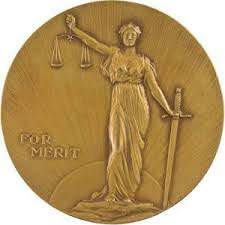
The Spingarn Medal is awarded annually by the National Association for the Advancement of Colored People (NAACP) for outstanding achievement by an African American. The award was created in 1914 by Joel Elias Spingarn, Chairman of the Board of Directors of the NAACP.  It was first awarded in 1915  to biologist Ernest E. Just, Head of Physiology, Howard University Medical School, for research in biology and has been given most years thereafter.


Sunday, 15 November 2020

John Oxenham (1852 - 1941) was the pen name of William Arthur Dunkerley – British Poet, writer, journalist and publisher

With grateful thanks to Connie Ruzich for reminding me that I had not  properly researched John Oxenham/William Arthur Dunkerley yet

William was born William Arthur Dunkerley on 12th November 1852 in Chorlton, Manchester, UK.  His parents were William Dunkerley and his wife Jane, nee Haydock.  William had the following siblings:  Mary J. b. 1848, and Agnes C., b. 1849.  He was educated at Old Trafford School and Victoria University in Manchester.

William wrote novels, poetry and hymns under his own name as well as the pen-name John Oxenham, however, he used the pen-name Julian Ross when writing as a journalist.  He married Margery Anderson (1853 – 1925) from Scotland and they had two sons and four daughters -  the eldest of whom,  Elsie Jeanette, became well known as Elsie J. Oxenham a writer of children's fiction. Another daughter, Erica, also used the Oxenham pen-name. Their elder son, Roderic Dunkerley, had several titles published under his own name.   The family moved from Lancashire to Ealing, West London, where they lived for forty years.

In February 1892, William founded the monthly magazine  "The Idler" with Robert Barr who edited the publication with Jerome K. Jerome.  He also started the publication "To-Day".  William lived for a while in France and travelled extensively in Europe, Canada and America. He also lived for a while in North America after his marriage, before moving to Ealing, where he served as a Deacon and teacher at the Congregational Church in Ealing. 

In 1913, William wanted to publish his poetry collection entitled "Bees in Amber". However, his publisher wanted to limit the book run to 200 copies.  William therefore had the collection printed at his own expense and sold almost 300,000 copies. 

During the First World War, William  published several volumes of poetry at his own expense and altogether they sold over a million copies, making him arguably the most widely read poet of WW1.  . He also wrote a song called "Hymn for the Men at the Front" which was set to music by American musician/composer Norris C. Morgan. That eventually sold more than 8,000,000 copies in aid of the wounded of the conflict.

In 1922, William and his family went to live in Worthing in Sussex, where he became mayor.  He died on 23rd January 1941, in Worthing, England.

“For The Men At The Front” by William Arthur Dunkerley (John Oxenham) set to music by Norris C. Morgan (? – 1936)

Lord God of Hosts, whose mighty hand

Dominion holds on sea and land,

In Peace and War Thy Will we see

Shaping the larger liberty.

Nations may rise and nations fall,

Thy Changeless Purpose rules them all.


When Death flies swift on wave or field,

Be Thou a sure defence and shield!

Console and succour those who fall,

And help and hearten each and all!

O, hear a people's prayers for those

Who fearless face their country's foes!


For those who weak and broken lie,

In weariness and agony--

Great Healer, to their beds of pain

Come, touch, and make them whole again!

O, hear a people's prayers, and bless

Thy servants in their hour of stress!

[Five million copies of this hymn have been sold and the profits given to the various Funds for the Wounded.    It is now being sung all round the world.]

For those to whom the call shall come

We pray Thy tender welcome home.

The toil, the bitterness, all past,

We trust them to Thy Love at last.

O, hear a people's prayers for all

Who, nobly striving, nobly fall!


To every stricken heart and home,

O, come!    In tenderest pity, come!

To anxious souls who wait in fear,

Be Thou most wonderfully near!

And hear a people's prayers, for faith

To quicken life and conquer death!


For those who minister and heal,

And spend themselves, their skill, their zeal--

Renew their hearts with Christ-like faith,

And guard them from disease and death.

And in Thine own good time, Lord, send

Thy Peace on earth till Time shall end! 

“NEWFOUNDLAND MEMORIAL” a poem by John Oxenham


This poem is engraved on a plaque at the entrance to Newfoundland Memorial Park, in France - the scene of the attack by the 1st Battalion of the Royal Newfoundland Regiment on 1st July 1916. Every Canadian officer who fought in that battle was either killed or wounded.

Tread softly here! Go reverently and slow!

You let your soul go down upon its knees

And with bowed head, and heart abased strive hard

To grasp the future gain in the sore loss!

For not one foot of this dank sod but drank

Its surfeit of the blood of gallant men.

Who for their faith their hope - for life and liberty

Here made the sacrifice - here gave their lives

And gave right willingly - for you and me.


From this vast altar-pile the souls of men

Sped up to God in countless multitudes.

On this grim cratered ridge they gave their all.

And giving won.

The peace of Heaven and immortality

Our hearts go out to them in boundless gratitude.

If ours - then God's for His vast charity

All sees, all knows, all comprehends - save bounds

He has repaid their sacrifice - and we - ?

God help us if we fail to pay our debt

In fullest full and all unstintingly!

Sources:  Find my Past

Catherine W. Reilly “English Poetry of the First World War: A Bibliography” (St. Martin’s Press, New York, 1978) 

http://www.masters.ab.ca/bdyck/Diary/Quentin2/index.html

https://www.public-domain-poetry.com/william-arthur-dunkerley/for-the-men-at-the-front-28224

https://www.warmuseum.ca/firstworldwar/history/after-the-war/remembrance/beaumont-hamel-newfoundland-memorial/

https://www.loc.gov/collections/world-war-i-sheet-music/?fa=location:no+place,+unknown,+or+undetermined%7Csubject:world+war%7Coriginal-format:notated+music%7Clocation:place+of+publication+not+identified&sp=4&st=gallery

https://www.newspapers.com/clip/9097345/norris-c-morgan-obit-1936/

https://www.istockphoto.com/photo/poem-on-plaque-at-newfoundland-memorial-beaumont-hamel-gm466196748-60275724 


Monday, 26 October 2020

Laurence Housman (1865 - 1959) – British writer, poet and artist


Laurence was born in Bromsgrove, Worcestershire on 18th July 1865. His parents were Edward Houseman and his wife, Sarah Jane, née Williams.   He was one of seven children – among his siblings were the poet Alfred Edward (A. E.) Housman (b. 26th March 1859) and the writer Clemence Housman (b. 23rd November 1861). 

His mother died in 1871 and in 1873 his father married one of his cousins - Lucy Agnes Housman. Educated inititially at Bromsgrove School, Laurence went with his sister Clemence to study art at the Lambeth School of Art and the Royal College of Art in London.

A staunch socialist and pacifist, in 1907 Laurence founded the Men's League for Women's suffrage with Henry Nevinson and Henry Brailsford.   In 1909 Laurence and his sister Clemence founded the Suffrage Atelier - an arts and crafts society that worked closely with the Women's Social and Political Union and Women's Freedom League. They encouraged non-professional artists to submit work and paid them a small percentage of the profits. The “Anti-Suffrage Alphabet”, written by Laurence Housman and edited by Leonora Tyson, was published in London In 1911.

With regard to his art work, Laurence illustrated George Meredith's Jump to Glory Jane (1892), Jonas Lie's Weird Tales (1892), Christina Rossetti's Goblin Market (1893), Jane Barlow's The End of Elfintown (1894) and his sister's novella The Were-Wolf (1896). He also wrote and published several volumes of poetry and a number of hymns and carols.

"Armageddon - and After" 

We fought at Armageddon for the freedom of the world ! 

I fought, and you fought, and here our bones lie mixed. 

By the master-hands which held us, eastward and westward hurled, 

We were shattered, we fell down, for the place and time were fixed. 


Tell me, O Brother Bone, what here remains to know : 

Marched we as comrades then, or foemen, ere we died ? 

Was it my hand or yours which dealt the murderous blow? 

Was it your hand or mine which turned the blow aside ? 


Took I my brother's life : what better life was mine ? 

Fought I for freedom ; — of freedom so bereft ? 

Had I the clearer sight to read the Heavenly sign? 

Had I the cleaner heart, to keep my hands from theft ? 


We fought at Armageddon for the freedom of mankind. 

And while we fought, behind us freedom was bought and sold ! 

The light that lit these sockets is out, and we are blind. 

Now with blind eyes we read ; now with dead hands can hold. 


Bone to my bone you lie, companion of my pains ! 

What link of life is this, which binds us wrist to wrist ? 

These, brother, these are not links but only chains, 

Worn by the living, that the dying lips have kissed. 


Millions we marched ; and the rattle of the drums 

Drowned the rattle of our chains, and the shouting held our ranks. 

For sweet to our ears was "The conquering hero comes," 

And sweet to our hearts " A grateful Country's thanks." 


We fought at Armageddon for the brotherhood of Man ; 

And safe within their fences the tricksters plied their trade. 

'Twas the old fight we fought ; and it ends as it began : 

The gamblers held their hands till the Last Trump was played. 


We fought at Armageddon for the freedom of mankind : 

I fought, and you fought, and here our bones lie strewn. 

The flesh is stript from off us, the chains remain behind, 

And the Freedom that we fought for is an unremembered tune.


From: “The Paths of Glory: a collection of poems written during the Wara, 1914 – 1918” (Allen & Unwin, London, 1919) which is available to read as a download from Archive:

https://archive.org/details/pathsofglorycoll00lloy/page/12/mode/2up

Laurence’s WW1 collections were:

“Collected poems” (Sidgwick & Jackson, London, 1937)

“The Heart of Peace, and other poems” (Heinemann, London 1918)

“The winners” (Booklovers’ Resort, 1915) and he had poems published in 4 WW1 anthologies.  Catherine W. Reilly, p. 175

Sources:  Catherine W. Reilly (English Poetry of the First World War: A Bibliography" (St. Martin's Press, New York, 1978)

Wikipedia

Find my Past

Free BMD